Friday, October 31, 2014

Autumn Poetry -- Happy Halloween!

In the newest issue of Star*Line, the poetry magazine of the Science Fiction Poetry Association, contributing columnist Denise Dumars writes at the end of her piece: Write a formalist poem 
about autumn that does NOT mention falling leaves, bones, October/November holidays, Pumpkin Spice Frappuccino, or similar tropes. Oh, and it has to contain the color blue.

I do not use any of the list of words she has forbidden. And I succeeded in putting the color blue into it. But she did say no to "similar" autumn tropes. Well, I used the words: skeleton, moonlight, phantom...so be it. And I don't write formal verse except for haiku and very very rare moments of rhyme so this is not a "formalist poem." But anyway, not one to pass up an autumn poetry challenge, here is what I came up with.

Happy Halloween!

Silver


I write to you
so many pages of mist
of winter suns
of sea foam

in this poem
are jars of dusk
and smoke
icicles in moonlight
shimmering skeletons

trees spill coins
at this edge of the year
this poem
alights in your eyes
all the silver days

I write to you of an older season
breathing its iron river-scent
of rain and lichen and chrome-blue stars
drunk on toadstool wine

this poem conjures
sweet long nights
phantoms of alabaster and lamplight
floating by
competing with the fog

of all the wind-dreamt evenings
I write to you
where the fields snap with frost
and the air’s voice
whispers
the coldest secrets of the dead


Tuesday, October 28, 2014

Mini-Interview With Author/Poet David C. Kopaska-Merkel

Welcome to yet another author mini-interview for my blog. And welcome David C. Kopaska-Merkel.

David and I have known each other through mail and the Internet since the 1980s. He has also been kind to publish a lot of my poetry in his wonderful poetry magazine Dreams and Nightmares. That magazine's 100th issue is coming out soon, complete with color cover, and I am honored to have a poem within it. I'll announce here and on Facebook when it is out. In the past, David and I have also collaborated on poems together. That was a great experience.
Last year I read (and reviewed for Star*Line) his collection Luminous Worlds from Dark Regions
Press. Because David has written so many books, I heartily recommend this one as a good sampling, a great place to start if you have not had the privilege of reading him before.

And now, on to the interview!

David C. Kopaska-Merkel


Why do you write what you do?

I don't usually plan ahead. I write what comes into my head. I have ideas that knock hard to be let out. I like science fiction and fantasy, so that's what I write. I made up stories and poems for my children when they were small, so I write those things too. One thing I set out to write, deliberately, is the daily poem. These are usually haiku and they are usually about something that is in my presence. That is how haiku are supposed to be written, at least traditionally. I do try to write for themed issues and such, but sometimes everything I come up with just doesn't fit.

How does your writing process work?

I sit down to write, and sometimes something intelligible comes out. If I think I might be able to improve it, then I fiddle with it, adding commas and taking them out, wholesale reorganization, that sort of thing. Quite often, I decide the avenue I'm following is unfruitful. At that point I either start over with a piece of what I've got in front of me or abandon it altogether.

I have an online writing group. Each week we propose words and then the idea is that each of us will write a poem using some or all of the words. I find this is a good way to get started writing. Also, if you really try to use all the words, the challenge encourages creative thinking.

 What are you working on now?

I am working on a second book of children's poems. The Edible Zoo was written for my children, nieces, and nephews when the oldest ones were only a couple of years old. They really liked the funny poems about people and animals trying to eat each other, and over the years when more nieces and nephews were born, and another daughter, I added poems. Eventually it was published and a couple of them bought copies for their own children. So recently I wrote a silly children's poem about an animal (it wasn't being eaten). I read this poem to my other writing group (this one is local). Several members are pretty serious and accomplished writers. Anyway, everybody liked the poem, so that's my new project: write some more.

How does your work differ from others in the genre?

I don't know how to answer this question. I am one of several science-fiction poets who includes a fair amount of science in some of their poems, and I am the only one of these who is a geologist (as far as I know.) In many of my poems a viewpoint character struggles against a hostile or uncaring universe. Sometimes I feel sorry for this person. But does this set me apart from most other speculative poets? I don't think so.


Bio: David C. Kopaska-Merkel

When not writing poetry, David Kopaska-Merkel studies the varied and strange part of the Earth called Alabama. Kopaska-Merkel has written myriads of poems, stories, and essays since the 70s. He won the Rhysling award (Science Fiction Poetry Association) for best long poem in 2006 for a collaboration with Kendall Evans. He has written 23 books, of which the latest is Luminous Worlds, a collection of dark poetry from Dark Regions (http://www.amazon.com/Luminous-Worlds-David-C-Kopaska-Merkel/dp/193712892X/). Kopaska-Merkel has edited Dreams & Nightmares magazine since 1986. DN website http://dreamsandnightmaresmagazine.blogspot.com/. @DavidKM on twitter.

*

Thank you so much, David, for taking the time to answer my questions. Look for future interviews with more authors on this blog.

Wendy Rathbone

P.S. Below is David's complete bibliography! Check it out.

Poetry and fiction books by David C. Kopaska Merkel

Contact information: 1300 Kicker Rd, Tuscaloosa, AL 35404 205-553-2284 jopnquog@gmail.com

1.      underfoot, the runaway spoon press, 1991, ISBN 0-926935-60-7, 2nd printing ($6)
2.      a round white hole, dbqp press, 1993, a few left, available from author ($5)
3.      The Conspiracy Unmasked, Dark Regions Press, 1994, out-of-print
4.      hunger, Preternatural press, 1996, out-of-print
5.      Results of a preliminary investigation of the electrochemical properties of some organic matrices , Eraserhead Press, 1999, out-of-print
6.      Y2K survival kit, smoldering banyan press 1999, out-of-print
7.      The Ruined City, gnarled totem press, 2003, out-of-print
8.      Shoggoths, Sam's Dot publishing, 2003, out-of-print
9.      The Deadbolt Casebook, Sam's Dot publishing (fiction), 2004, out of print
10. the egg show, speakeasy press, 2005, ISBN 0-9762962-0-9 ($40, entirely handmade including the paper) http://www.speakeasypress.com/folded/foldedeggshow.html
11. I don't know what you're having, Sam's Dot publishing, 2005, out-of-print
12. Separate Destinations (with Kendall Evans), D66 Press, 2005, ISBN 1-892958-02-3, a few left, available from author ($7)
13. Hasp Deadbolt, Private Eye, Sam's Dot publishing (fiction), 2007, out-of-print
14. Drowning Atlantis, spechouseofpoetry.com (flash fiction), 2007, out-of-print
15. The memory of persistence, Naked snake press, 2007, out of print
16. Nursery Rhyme Noir, Sam's Dot publishing, 978-09821068-3-9  (fiction; incorporates 9 and 13), 2008, 2nd printing, available from author ($14)
17. Night Ship to Never (with Kendall Evans), diminuendo press, 978-0-9821352-3-5, 2009, out-of-print
18. The simian transcript,  Banana Oil books, flash fiction, 2010, a few left, available from author ($8)
19. Brushfires, Sam's Dot publishing, poetry, 2010 ($9)
20.  The Tin Men (with Kendall Evans), Sam's Dot, poetry, 2011 ($9)
21.  The Edible Zoo, Sam's Dot, children's poetry, 2012, available from author ($10)
22.  Luminous Worlds, Dark Regions Press, 2013, ISBN 978-1-937128-92-0


Available from the author (except 10 & 22); prices include shipping. Make checks out to author.

Monday, October 27, 2014

Beneath the Blue Dusk and the Sea

Lots of new stuff going for me and I'm enjoying every bit of it.

First I have a new book out, a collection of short stories, half new, half previously published in various anthologies. The collection is called Beneath the Blue Dusk and the Sea and was great fun to put together.

The collection contains 8 stories and 8 poems.
All the poems except one are brand new, never before published.

Next, I have designed a new cover for my science fiction novel, Pale Zenith. I'm quite happy with it. Much better than the first.


New cover for Pale Zenith
And speaking of Pale Zenith, I have one short story and one novella, both set in that universe, that I am now re-editing. They will soon be put out in a book which will be a companion book to Pale Zenith. The book will be called Moltenrose, and I am finalizing the book format now.

Another project I am working on is a collection of some of my previously published vampire short stories. The book will be called Bitters and I plan to have it out before the end of the year with a nice, enticing cover!

And not to be forgotten, my new poetry book, Turn Left at November, will be coming out from Eldritch Press in November of this year. I'm very excited and as soon as I have a cover to show I will post it here.

I have plans to begin a new novel. Nothing specific yet because, well, I'm a seat of the pants kind of writer. I write "into the dark" and that is why I enjoy it so much. I have found, after much trial and error (and some success) for decades that giving myself permission to just play on the page (and never to someone else's expectations or specifications) has produced some of my best work.

You know, people have accused me of "having stars in my eyes" because I say I enjoy writing. Some people don't even "trust" writers who say that. But I've worked long and hard at my craft, more than 30 years of practice, millions of words. I'm no newbie. I have created an environment both physical and mental that is like a writer's toybox wherein I lift things out and play all day (when my travel-for-work season is over,) losing all sense of time. If I'm doing it all wrong, so be it, I don't care. I've spent years unlearning so many writer-myths that I could write books just about that. As a result of all that, no more blocks, self-censorship, self-criticizing. This is for me. I work at the craft I love stress-free. Any sales to magazines, anthologies and publishers I've made is, really, just the extra cherry.

If you have read this blog before, you know I write poetry ALL THE TIME. So here is the first part of a four part poem about rain I wrote last night. (I mostly write just before I go to sleep...sometimes I fall asleep with my journal pen in my hand.)

I Am Rain

1.
Rain
taps
haunting the window
wanting into
my mind
to slide its cold-moss thoughts
helm my dreams
liquid and alive
letting clouds walk into me
for awhile
I’m a shattered lake
drifting on
mouths of air
I contain
shimmering mirrors
pools where the moon laps me
briefly unfolding its wide circle
to let me see inside
I hear
the lone weeping of stars
as I fall


More free stuff: For today only (Oct. 27, 2014) my erotic romance The Foundling is free on Kindle until midnight. Enjoy!


Upcoming: I will be at Mystery and Imagination Bookshop in Glendale, CA for a book signing at 6 P.M. November 6, 2014. The signing is for the long-awaited iconic anthology A Darke Phantastique edited by Jason V. Brock. My short story "I Keep the Dark that is Your Pain" appears within.

My next blog will be an interview with the wonderful poet David C. Kopaska-Merkel.

Thursday, October 16, 2014

Mini-Interview With Maria Alexander

In continuing my series of mini-interviews with fellow authors, today's focus is on Maria Alexander. Maria and I share room in the anthology Mutation Nation, where her horror story, "Nickelback Ned," is collected. You can also find this story in her collection, By the Pricking. We actually met at a book signing for Mutation Nation. She is a quick-witted, enthusiastic, sparkling personality.

She is also a wonderful poet and screenwriter.

Her first novel, Mr. Wicker, was just released in September from Raw Dog Screaming Press.

Here are her answers to my questions.

Maria Alexander


1. Why do you write what you do?

Writing is like possession. I let a story ride me like the loa until the spirit is done with me. But why did a particular story take over my life? And why did it have such deep emotional resonance that I can't let go of it? I can't say. I suppose darker stories inhabit me because I am pretty spooky in general. Do I sometimes make choices about projects? Of course. But when Papa Ghede wants to get hitched, that cigar smoke is the sweetest perfume on earth. I can't resist it. Mr. Wicker was born from a specific incident in my life that was quite bizarre yet powerful — so powerful, in fact, that I've carried it with me all these years. But I'm not telling that origin story in interviews or on my blog. Rather, there's a puzzle at the end of the book trailer:

http://youtu.be/QedH1hvGPnQ

If you solve it, you will embark on a journey that reveals the story as you go.

2. How does your writing process work?

Normally, an idea strikes and I can't stop thinking about it. If I'm in the middle of another project, I finish that project before moving onto the new idea. (Often, the new idea needs time to "bake," anyway.) Soon, the skeleton of the story lies before me, including and especially the ending. There's usually something cathartic about that ending, which I think is why it's so important for me to write the story (getting back to the first question). I start with 3 x 5 cards if it's a book — which it is almost always these days — and I look for structure first. Are my opening, midpoint and climax in place? I used to be a screenwriter, so I'm very conscious about structure. I usually have a firm idea about my main character, but the others are more fluid. I start writing, trusting that, even if I initially don't like what I put on the page, I'll eventually come up with something much better.

3. What are you working on now?

I just finished writing Snowed, a YA novel in a dark trilogy. I'm currently researching and outlining the second book, Inversion, as well as querying agents. The first book has gotten such a wildly enthusiastic response from my beta readers — almost all teenagers and their mothers who couldn't put it down — that I feel confident it'll soon find its way into readers' hands.

4. How does your work differ from others in the genre?


I cannot for my life come up with a story about zombies, werewolves, vampires, witches or any other popular trope. I suspect that, if I could write about zombies in particular, I would have had a much bigger career by now. I've thought about this quite a bit, but it's just not in my creative DNA. I do have one published vampire story ("Veil of Skin"), but the original version had no real vampires at all. For years, I couldn't sell the story until I turned this one character into a real vampire rather than a person in a costume. I have written about ghosts, but most of those tales are based on my real-life personal experiences, of which I've had many; that might be different from most authors who write ghost stories.

For me, I tend either to twist existing myths or come up with my own creatures and mythologies. If there is a trope that I've embraced at all, it's the psychopomp. An example of that is "The Dark River of His Flesh," a story that first appeared in Paradox: The Magazine of Historical and Speculative Fiction. Set at the dawn of Queen Victoria's reign, it's about a man grief-stricken by the suicide of his illicit lover. One night, a mysterious link boy leads him to an absinthe bar that magically changes location every time he visits. The absinthe drinks allow him to see his dead lover, but they're also leading him somewhere increasingly hellish with each visit.

So, that's how my stories might be different. I just hope people enjoy them. Thanks, Wendy!


Bio


Maria Alexander is a produced screenwriter, games writer, acclaimed short story writer, virtual world designer, award-winning copywriter, interactive theatre designer and Bram Stoker Award-nominated poet. Her debut novel, Mr. Wicker, is now available from Raw Dog Screaming Press. Library Journal gave it a Starred Review. Publishers Weekly calls it "...(a) splendid, bittersweet ode to the ghosts of childhood."

When she's not wielding a katana at her shinkendo dojo, she's being outrageously spooky or writing Doctor Who filk. She lives in Los Angeles with two ungrateful cats and a purse called Trog.

*

Thank you to Maria for doing this interview!

Next week I will interview the poet David C. Kopaska-Merkel.

Saturday, September 27, 2014

Old Moons Bespectacled from My Childhood

I’m going to talk a bit about poetry.

Okay, okay, don’t shrink back in horror; don’t fake a fever. It’s a total myth that poetry is hard and boring and uppity.

Here’s proof that you encounter it every day and ENJOY it.

The obvious one is in music. Lyrics (even bad ones) are poetry. People have favorite songs they sing in the car, in the shower, to their puppies. Guess what you’re doing when you do that? You’re belting out poetry!

You see it everywhere. Greeting cards. License plates. Advertisements employ it. It may not be great poetry but it’s accessible and memorable (and who’s to say not great?) Sample of one of the best: Raid kills bugs dead. It’s got it all, a strong action verb, horror and a great end delivery.

Poetry gets harder when it employs too many words that confine it and distract from the point, when it uses difficult words (who wants to go to the dictionary every three seconds?) and when it rambles self-indulgently, with too much self-consciousness and without a sense of self control. Mostly this stuff is avoided by the masses. Even the classics. And what about classics? Just because it’s labeled as one does not necessarily make it something you must like or define as good. That’s up to each individual. You don’t have to be a Shakespearean scholar if you don’t want to be. You don’t have to snobbily say you love Spencer’s “The Fairy Queene” or Milton’s “Paradise Lost” if you really can’t relate or understand. If you truly like them, that’s fine. If you don’t, you don’t. You can still love poetry. There are no rules. Simply, if you don’t like it, change the channel. Screw what the critics say. Thinking you must like something because critics or teachers say it’s good or else something is wrong with you is...well, wrong.

I’ve been writing poetry since age 12. I’ve been reading it, too, everything I can get my hands on especially when I was younger. Confession: I only really love about 10 percent of everything I’ve read. I’ve read a lot. I majored in Lit./Writing at UCSD. Believe me. I’ve been exposed to tons of it. And I'm grateful for that background because education is about discovering what you love and don't love.  But loving only 10 percent of poetry means that I am “meh” about 90 percent of it. That’s a huge lot of poetry! And yet, I am a poetry lover. I love it, I write it, I sing it, I read it. When I find the good stuff that makes my heart grow three sizes in one day (yes, even Dr. Suess was a poet,) I feel like I’ve won the lottery.

My brain is trained to think in the language of poetry. I trained it that way. I think maybe I was born that way but I forget. My mom is credited here with helping me 'think' maybe I had it all along because she read to me and my brother when we were little. Some of what she read to us was children’s poetry from “gardens of verses” and “treasuries of poems.” Even at age four they filled me with so many feelings. My mother reading to us ignited the poet in me even at that age. I never forgot that. Later I exercised that poetry muscle by training. I did it on purpose because that was how I wanted to be and think. The best training was when I discovered translations of ancient Japanese and Chinese poetry. Those poets really knew how to write a poem, a real poem about heart, feeling, longing, life, the Earth, the skies, love…but without being super obvious about it. Their poems truly stand the test of time. They taught me that instead of saying “I cried piteously” to look for an image that might 'show' that instead of telling. Like: “my sleeve is wet with tears.” Those poets, and their more natural styles, taught me about complexities in simplicity and I read them over and over again.

After college I started over in my poetry writing, banning rhyme and form (my choice; form is not for me except haiku, but others make different choices and love form and that’s okay!) I realized I am more moved, shattered, amazed by little events, personal and seasonal, than I am by world events. So my poems are not about anything so grand as politics and world order. I am a dreamer and my dream worlds are odd and alien and escapist. And that’s okay, too. I have feelings inside for which there are no proper English words. So I think of images to convey them. Put all that together and I end up filling my journals with lines like these which I posted to a friend’s Facebook page today:
 
leaves fidget in the sunset streets
pressure of gold winds
I wade
deep cool trails of ghosts
no one can see the thousand distances
that inhabit my October veins

Sometimes I might throw in a starship or robot or vampire (instead of the ghost) because, well, I truly never grew up. Weird? No. Remember: no rules. Everyone is free in poetry to do their own thing. It’s not about being published or acclaimed, it’s just about opening up to an authentic self and true wonder unencumbered (as much as possible) by the outside programs and expectations of others that can ruin everything. You like leather and lace, toss some into your poems. You like bluebells, sprinkle in those, too. You like zombies, same thing. Snails, leaves, porn, picket fences or pickles.

Whatever you love, that's what you should write. Maybe I keep writing the same poems over and over again; maybe my stuff is truly self-indulgent. But I don’t care. It’s like the best drug.

I’ll end with a poem I wrote talking about what I write. I’ve written tons of poems like this. But this one gets to be here today because it is most recent…like five days old.

Interviewer: Describe Your Poetry

My answer:

I have written of
the old moons
   bespectacled from my childhood
drifts of meteor ash
all the gold and crackling grasses of Earth
bodies of light
empyrean seas
crests of star-waves
stygian mermen with tongues of salt
all the relic Decembers
all the tomorrow worlds
   airless and so silent they roar
the owl determining night’s depths
glazed-green lightning
the sorrow of storms
strange and ridiculous voids
ghost winds crying
ghost moons trailing frail light
the dreams of star-riders
spinning torn from the sun

Wendy Rathbone, author of the poetry collection, Unearthly,  as well as the novels Letters to an Android, Pale Zenith and more.


Friday, September 26, 2014

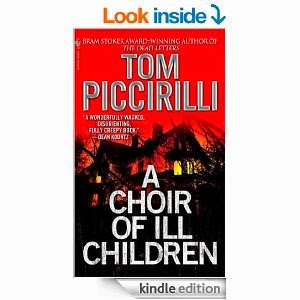
Mini-Interview with Tom Piccirilli


Tom Piccirilli is a writer of horror, thrillers and crime novels.

Back in the 1990s, Tom and I used to correspond a lot. His enthusiasm for writing is contagious. He is a true writer, dedicated and always learning, a real craftsman. He is one of those rarer writers who understands that stories are about people first and foremost. His characters are interesting, different, tragic and sympathetic. He lets them tell their story and the reader is pulled in.

I just finished reading A Choir of Ill Children, one of my favorites, filled with interesting characters and poetic writing. With 25 novels and uncounted short stories sold, I believe he has mastered, and continues to master, the art of the written word.

He is also a poet with a brand new poetry collection just out, Forgiving Judas, from Crossroad Press.
 I just read it and highly recommend it.

Here are his answers, brief but eminently wise, to the four writerly questions I always ask.


1. What are you currently working on?
A novel that's as much a family drama as a murder mystery or a revenge story.
2. How does your work differ from other writers in the genre(s)?
Hopefully they'll dig my characterization and voice more.
3Why do you write what you write?
Crime fiction is an older man's game. Horror and fantasy are a young man's bag. You create a world instead of working in the real one.
4. How does your writing process work?
I write until I find myself a quivering mass of jelly.


Bio: Tom Piccirilli is the author of more than twenty-five novels including A CHOIR OF ILL CHILDREN, SHADOW SEASON, THE COLD SPOT, and THE LAST KIND WORDS.
He's a four-time winner of the Stoker Award, two-time winner of the International Thriller Award, and has been nominated for the World Fantasy Award, and twice for the Edgar Award. Marilyn Stasio of The New York Tims Book Review called THE LAST KIND WORDS, "A caustic thriller...the characters have strong voices and bristle with funny quirks." New York Times bestselling thriller writer Lee Child said of Tom's work, "Perfect crime fiction...a convincing world, a cast of compelling characters, and above all a great story" And Publishers Weekly extols, "Piccirilli's mastery of the hard-boiled idiom is pitch perfect, particularly in the repartee between his characters, while the picture he paints of the criminal corruption conjoining the innocent and guilty in a small Long Island community is as persuasive as it is seamy. Readers who like a bleak streak in their crime fiction will enjoy this well-wrought novel." Keir Graff of Booklist wrote, "There's more life in Piccirilli's THE LAST KIND WORDS (and more heartache, action, and deliverance) than any other novel I've read in the past couple of years." And Kirkus states, "Consigning most of the violence to the past allows Piccirilli (The Fever Kill, 2007, etc.) to dial down the gore while imparting a soulful, shivery edge to this tale of an unhappy family that's assuredly unhappy in its own special way."
Tom Piccirilli and his wife Michelle Scalise

Much thanks to Tom for doing this interview for my blog!

Wendy Rathbone, author of Letters to an Android, Pale Zenith, and more.

Sunday, September 21, 2014

Writing Updates and Other FUN Stuff!

Lots of writing stuff going on for me quite suddenly.

Turn Left at November

Last week I posted on Facebook that I sold a book of poems (54 poems) to Eldritch Press, entitled Turn Left at November. I'm very excited about this. While I have sold/published hundreds of poems since my very first sales all at once to Aboriginal SF, Star*Line and Dreams and Nightmares in my mid-20s, I mostly still write them only for myself. For years I actually stopped marketing them. This year I stepped up to the plate again. It's been very rewarding. Here's a link to Eldritch Press.

http://www.eldritchpress.com/home.html

Nice site! While it looks very horror oriented, in truth my poems in the collection cross all genres from soft horror, soft sf, seasonal, emotional-driven and mainstream. I don't write to genre. I write what I feel like writing in the moment and I am inspired by all different genres. The poetry editor at Eldritch was not put off (and I feared he would be.) Instead, he thought my cross-genre tastes would mean my book would appeal to a wider readership. Consider me flattered.

I always thought not "writing to genre" hurt me as a writer. I think in the traditional pro publishing venues (like the big NYC publishing houses) it did because despite the "myth" that they are gatekeepers of great literature, really they mostly looked at books as widgets and how to market them. If your book was hard to categorize they did not know what to do with you no matter how good the writing was. It also meant I couldn't even get agents who actually liked my work to bother with me because they already knew in advance that the marketers at publishing houses wouldn't know what to do with me.

Take my science fiction novel Pale Zenith as an example. Years ago, respected agent (and former editor of Asimov's SF) Shawna McCarthy actually loved the first draft of that novel. But she did not represent it because, she told me, publishers were looking for more traditional sf, and not the "type" of book I had written. I don't know what "type" of book I actually wrote. It takes place in two alternate universes. It has inter-dimensional travel, psychic warfare, and machine thingamabops that travel through time and dimension called spychiatrists. Definitely sf. But it also is a character-driven novel BIG TIME and it has violence and some explicit sex. Well, so does every other Hollywood blockbuster. But the characters are first and foremost my focus. Everything else is background. The writing is lush...but definitely not over-written. Shawna suggested I do a prologue to orient readers into the book. I did it. But it's my least favorite part of the book and I've considered in future printings to edit that part out altogether. It tries to make the book more traditional but you know what? 'Traditional' is not always such a great word.

My point: A darn good, well-written novel got shelved (after making the rounds to two more agents, both male, both of whom insulted me) and would still be there if not for this new world of publishing and unique encouragement to break old traditions by small press and indie publishers (Pale Zenith is published, by the way, by Eye Scry Publications.)

So back to the original topic, Turn Left at November: I want to thank Eldritch Press for taking me on with my cross-genre poetry, for being able to "see" more in depth, that there are varying shades to 'the dark', and being open to that.

Letters to an Android

My newest book, Letters to an Android, is really getting some nice comments from readers. Some are posting reviews, but most are just letting me know privately...they can't put this poetic, soft sf, character-oriented book down! I have also gotten compliments on the world-building, the likable characters, the writing...pretty much everything about it. It's hard for me to "toot my own horn" so to speak, but this really makes my year!


But the problem remains: finding readers. Finding those who will take a chance on someone they don't really know. I've been around for years, publishing a lot in genre magazines in the late '80s and all thru the '90s before I took a long break. Some people remember. Most don't. But I'm not whining. I'm thrilled to have any readers. Just sayin': marketing is a tough, tough job.

So I'm going to put it out here on my blog with no deadline in place and no date that this offer expires: If you wish to review Letters to an Android for any website, blog, magazine, newspaper, or other venue, just pop me an email (wrathbone@juno.com) telling me where you'll review it and when and I'll send you a pdf. At this time, I can't send paperbacks. It's too expensive.

However, if you just want to read for pleasure, for yourself, and have a good time, the ebook is real cheap on Amazon. It really isn't much to gamble to try it out, plus if you're not sure, the look-inside is free. If it doesn't hook you...my bad.

Here is some artwork I found that captures the essence of my main human character in the novel, Liyan (I pronounce it 'lion') at age 20, just before he goes off to travel the stars at the book's beginning. Except for the uniform, which is white in my novel, this artist captures the eccentric scenario, mood and emotional foundation I was going for throughout the book. (Alas, I've tried to contact this artist many times to see if she does commission book covers but she does not answer.)

More writing news abounds, but it will have to wait for another post.